
Court-Ordered Mediation
[13/10/2026]
As part of the Mediation Week, the experts at Germain Maureau present a series of five episodes exploring the various aspects of industrial property mediation.
In our previous episode, an SME believed that a partner was using technology covered by its patent.
At the same time, two companies were considering how to organise the coexistence of their trademarks.
In both of our examples, tensions built up to the point where the parties ended up in court.
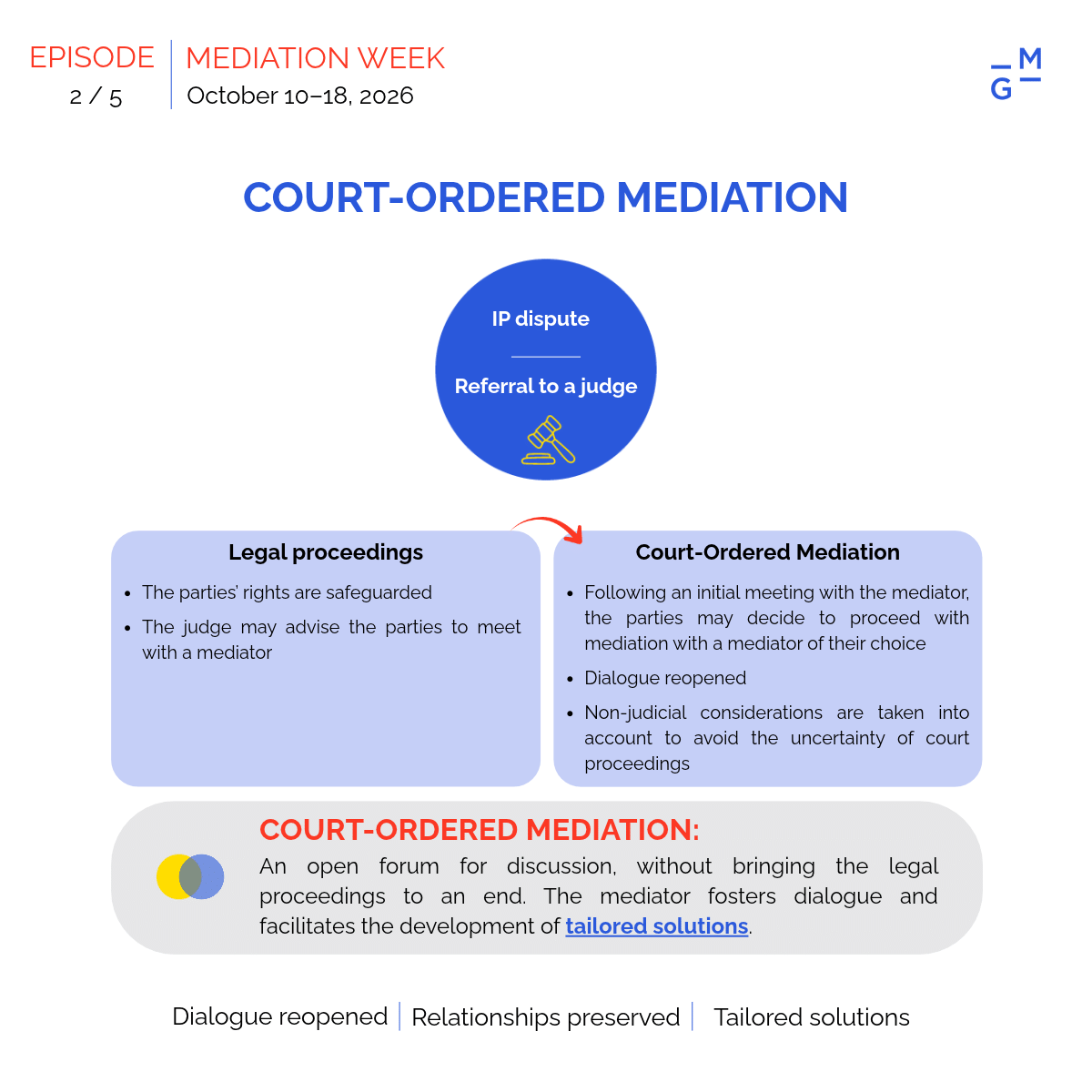
Many regard the referral to a judge as a point of no return.
Yet, there is still room for dialogue.
In some particular cases, it is even compulsory to attempt an amicable settlement before taking the matter to court. And the law now provides that the judge may, at any time, advise the parties to meet with a mediator to find out about mediation and, if appropriate, to commence the procedure.
The legal proceedings continue, and the parties’ rights are safeguarded, but at the same time, discussions can begin.
These discussions provide an opportunity to address concerns that have no place in legal proceedings: industrial risks, commercial concerns, the impact on business operations, the company’s reputation, or the maintenance of a business relationship.
Judicial mediation therefore does not preclude recourse to the courts, but enables the parties to play an active role in finding a solution tailored to their circumstances.
Very often, simply re-enacting a conversation is enough to bring potential points of agreement to light – points that remain hidden in a purely legal context.
➡️ But was it really necessary to wait for the judge to rule before opening this discussion?
We will answer this question in our next episode, which will focus on conventional-mediated settlement.
Would you like to find out more about the different types of mediation or work out which one would be best suited to your situation? Get in touch with the experts at Germain Maureau.
Don’t miss episode 3 of 5 tomorrow.